
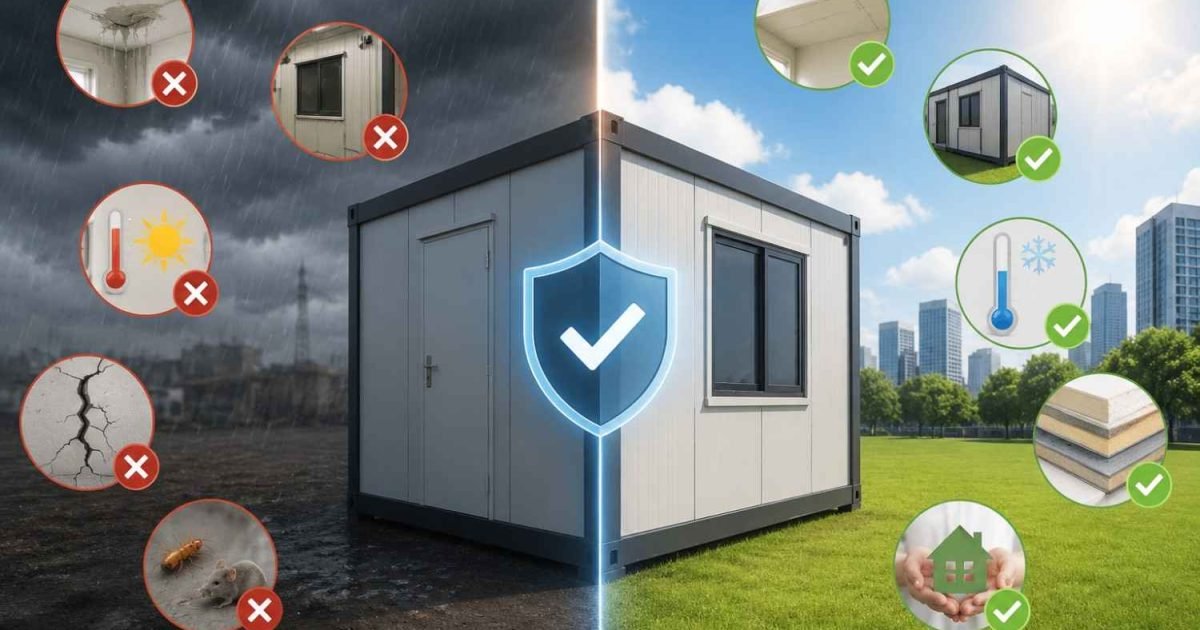
In the building industry, the construction with prefabs has changed the way offices and commercial spaces are built, especially through modular solutions such as portable cabins and container-based structures used in commercial projects. Though it is adopted widely, prefab cabin myths are continuing to mislead buyers, investors, and project managers. And that is why many people are depending on outdated construction methods and associate prefabricated cabins with low-quality temporary structures.
If you are someone who is considering prefab, such as office cabins, container offices, or modular units, you have to understand the real facts and myths around it. Here, in this article, we will discuss the 10 common misconceptions about prefab cabins and the reality behind each of the myths.
Table of Contents
Toggle1. Myth: Prefab Cabins and Containers are Always Poor Quality
The most common myth around prefab cabins is that they are always of poor quality. But you should know that in reality, prefab is manufactured to high standards and surpasses the international quality standards like ISO 90001 and building codes. So in most cases, the quality level of prefabricated construction, as well as portable cabins and container office systems, is higher than that of conventional construction.
2. Myth: Prefab Cabins Won’t Last Long
Another prefab myth is that prefab cabins won’t last long, but this is a myth and is completely wrong. Actually, prefabs have very tight frames that make the structure longer-lasting in real-world scenarios, whether it is portable cabins or container-based modular buildings used on-site.
Most of the prefab cabins can resist extreme natural phenomena like hurricanes and earthquakes that can happen at any time. Prefab cabins are actually engineered to last as long as conventional buildings. When properly maintained, even office cabins and container units can last for more than fifty years.
3. Myth: Prefab Cabins Have Only Limited Design Options
One of the outdated perceptions about prefabs is that there is only a limited type of design options. But modern prefab construction involves a variety of design options that can be optimised to any building type, from residential units to portable cabins and container-based office setups.
Therefore, buyers and project managers can make changes in layouts, flooring types, plumbing fixtures, electrical systems, and can even remodel after construction. Prefab construction also offers a wide range of design possibilities, even for modular cabin and container office designs.
4. Myth: Prefab Cabins and Containers are Suitable for Short-Term Use
There are many people who firmly believe that prefab structures are temporary and used only for disaster relief, office construction, or short-term housing, like site cabins or container units.
However, this conception is false, as prefabricated construction is apt for permanent residential homes, commercial buildings, schools, hospitals, high-rise structures, warehouses, retail spaces, as well as long-term portable office cabins and container-based commercial units.
5. Myth: Prefab Cabins Don’t Have Any Resale Value
The quality of prefab constructions is more than that of conventional buildings that we see around, especially modern portable cabins and container office structures. For the same reason, the value of prefab buildings also appreciates at the same or higher rates compared to traditional buildings in the same area.
Prefab buildings have the same value as building projects built conventionally. Actually, the investment quality greatly depends on the quality of materials used and the location, not on whether it is a prefab, cabin, or container-based structure.
6. Myth: All Prefab Cabins and Containers are Identical
Another prefab myth is that all the prefab buildings look similar as a result of mass production. But in reality, prefab structures come in various styles and looks, from modern portable office cabins to customised container cafes and industrial units.
They are just like properties that are built on-site conventionally. You cannot find similarity in prefab structures, as they come both in minimalistic office designs and advanced industrial container-based formats.
7. Myth: Prefab Containers are Not Suitable for Existing Sites or Lot Requirements
In reality, there are project managers who worry because they have a prefab myth that prefab buildings won’t fit their sites. But actually, prefab structures can fit into the size and project requirements of the site, whether it is portable cabins, container units, or modular office setups.
Manufacturers offer prefab that can be accommodated to particular site requirements, as it can be made compatible with existing plots, industrial zones, and commercial developments, including cabin and container-based solutions.
8. Myth: Prefab Cabins Are Not Sustainable or Environmentally Friendly
A popular prefab myth is that prefab constructions are not sustainable and are bad for our natural habitat and environment. You have to realise that prefabricated construction, especially modular systems like portable cabins and container-based buildings, is actually highly sustainable and eco-friendly for all kinds of building works.
The controlled factory environment in prefab construction minimises industrial waste, allowing raw materials to be used more effectively. Most prefab buildings, including container offices and portable cabins, have excellent thermal insulation, which reduces energy consumption for offices, hospitals, warehouses, and residences.
9. Myth: Prefab Cabin and Container Construction Is Always Quick
Even though prefab construction helps in the completion of projects faster, such as portable cabins and container office units, it depends on the complexity of the project, site conditions, transportation logistics, and permitting.
Modern buildings can be completed within a few months with prefabs compared to traditional constructions, but faster is not always guaranteed, especially for highly complex industrial or commercial container-based projects.
10. Myth: Prefab Cabins Are Way Much Cheaper Than Traditional Construction
The cost of construction always depends on design complexity, transportation distance, and site preparation. Yes, prefab can provide some cost savings as it needs less labour time, including portable cabins and container office setups, but it is not always cheaper.
In cases where there are complex custom requirements, traditional construction may be more cost-effective. So you must always compare the total project cost instead of comparing initial budget estimates for prefab cabins or container-based solutions.
Conclusion
Prefab cabins are a sustainable building solution used in modern times in homes, commercial projects, portable cabins, container offices, and modular structures. But this construction method is usually judged by people with prefab myths.
Undoubtedly, superior quality, durability, and extensive customisation are features of prefab construction. Additionally, strong resale value makes it a suitable option for smart buyers and builders who are eager to invest in cabin and container-based structures. You can save money, time, and reduce stress by making informed decisions about prefab myths.
FAQs
1: Are prefab cabins as durable as traditional construction?
Yes. Prefab containers are engineered in a similar way to traditional construction building codes. The tighter and stronger frames make them capable of withstanding extreme weather conditions.
2: Can I customise a prefab cabin or container?
Absolutely. One of the major features of prefab construction is its extensive customisation options, including layouts, flooring, fixtures, electrical systems, and finishes. You can also remodel them after installation.
3: Do prefab cabins have good resale value?
Yes. Prefab structures appreciate at similar or sometimes higher rates than traditionally built structures in the same area due to their quality and durability.
4: Can prefab cabin construction be considered environmentally friendly?
Yes. Prefab construction reduces waste through factory-controlled manufacturing and provides excellent thermal insulation. This feature guarantees that prefab construction is highly sustainable for all types of building requirements.
5: How long does it take to build a prefab cabin?
Prefab buildings can be made within a few months, quicker than traditional construction methods. However, timelines change depending on requirements such as project complexity, site conditions, and transportation logistics.
Read More Blog:
Pre Engineered Building Manufacturers in Delhi NCR – Benefits, Features & Applications
Portable Office Cabin in Delhi NCR – Benefits, Uses & Complete Buying Guide 2026
Cement Panel Board Prefab Houses in Hyderabad: Cost, Benefits & Design Options