
Not sure which waterproofing method is right for your cabin? You have to choose the correct waterproofing method for cabin and container structures that you purchased. While selecting the right cabin, consider the material, location, usage and how often it is getting exposed to rain, heat, and humidity matters a lot.
In the case of commercial cabins and modular containers, the best solution includes proper surface preparation, seam sealing, roof protection, and corrosion resistance, instead of a single coating.
Applications of Cabins and Containers
Portable cabins and containers are commonly used in most of the commercial spaces like office spaces, site cabins, industrial units, cafes, restaurants, portable farmhouses, and other storage solutions.
As portable cabins are usually prefabricated, they can be relocated or installed in outdoor environments, where moisture risks are common. Such moisture risks can significantly reduce the comfort and durability of the structure if it is not protected properly.
Therefore, waterproofing is not only about stopping the visible leaks in cabins and containers. It also helps a lot with condensation, protecting steel from rust, and preventing damp patches. Furthermore, the waterproofing of cabins can extend the service life of panels, joints, floors, and roof systems.
Why Waterproofing Matters for Cabins and Containers
If your cabins and containers are not properly protected, problems can occur at roof edges, wall joints, door frames, welds, and floor junctions. There is a possibility of corrosion, mould, insulation damage, and expensive repairs on such weak points in case of water exposure.
Long-term performance of the cabins and containers is what the owners want, not just water leak prevention. So, a good waterproofing system is extremely important for indoor comfort, low maintenance and provides the best resale value.
Common Water Risks for Cabins and Containers
There are different types of cabins and containers, which means that each type has a different moisture problem. Steel containers are affected by rust and condensation problems, and on the other hand, cabins with panel systems may have leaks through the joints, edges, and fastener points.
The most common points where water can get into cabins and containers are:
- Roof surfaces and roof edges.
- Welded seams and panel joints.
- Window and door frames.
- Floor perimeter and base connections.
- Cut-outs made during modification.
During the rainy season, the water pooling that can happen on the flat roofs can make the problems even worse. So, the drainage design of the cabins and containers matters along with the coating choice.
Main Waterproofing Method for Cabins and Containers
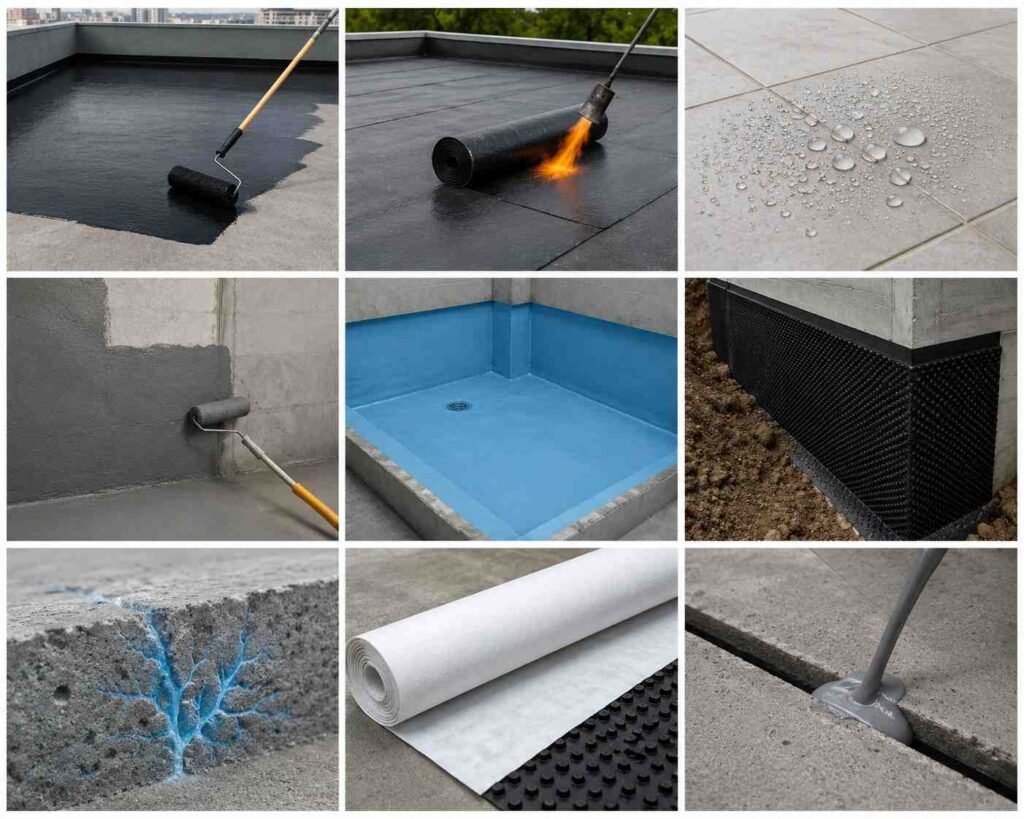
The best waterproofing method for cabin depends on various factors. Also, there is no particular waterproofing method that is suitable for all cabin units. The perfect method depends on your needs, like the level of moisture resistance, heavy-duty weather protection, or long-term industrial durability.
- Cementitious coatings are good for stable surfaces that do not move much, and it provides a straightforward protective layer.
- For a smooth finish, liquid waterproof membranes are the best choice.
- Bituminous coatings are perfect where cost and durability matter the most.
- Polyurethane membranes are a good option for high water exposure areas such as roofs and edges.
- Rust-inhibiting coatings are best for steel cabins and containers, as waterproofing alone won’t stop rust.
Choosing a Waterproof Method for Cabins and Containers By Structure Type
The right waterproofing method for cabin depends solely on the type or kind of cabin you have. The waterproof method that works for the site office wont be a good fit for a cafe container or industrial unit.
Office Cabins
Office cabins always require a clean, efficient and low-maintenance waterproofing system along with a durable roof and joint sealing. As office cabins are used every day, the priority should be given to interior comfort and leak prevention.
Industrial Containers
Since the industrial containers and cabins are exposed to heavy duty, corrosion resistance and long-term durability cannotbe over looked. So, surface preparation, rust removal, seam sealing, and protective coatings are given to industrial containers.
Cafe and Restaurant Containers
Cafe and restaurant containers need waterproofing so that hygiene and prevention of roof leakage are maintained, especially in the cooking and service areas.
What to Check Before Choosing a Waterproofing Method for Cabins
Before choosing a waterproofing system, consider the portable cabins real world conditions. The perfect waterproofing method must be suitable for the climate, usage patterns, and maintenance expectations.
So notice the material type, exposure level to water, structure movement, roof style, interior use, and budget and maintenance plan. If the structure has to be moved, then flexible membrane systems are safer than rigid coatings.
Surface Preparation
Waterproofing method for cabin wont work well on a dirty or damaged surface. Therefore, the cabin must be cleaned before the application of protective coatings. Also, if there are any cracks or loose edges in the cabins, then they must be sealed before the final coating.
Roof And Joint Protection
The water from rain and all is collected in the roof, so drainage design should be rated as a priority. As joints and welds are also natural entry points for moisture it must also be protected.
Interior Moisture Control
In steel cabins and containers, insulation and vapour barriers should be done along with waterproofing. It helps to reduce condensation and improve indoor comfort. This is useful for cafe containers, office cabins and portable farmhouses where people or employees spend long periods.
Maintenance And Inspections
A good and strong waterproofing system should have regular inspection. In addition to that, owners must check the roof edges, floor corners, sealant lines and drainage points, and make them waterproof. If there is any leak, the condition can become worse, especially after heavy rain or seasonal changes in the cabin location.
Prefab container and cabin owners must always check for early warning indicators like rust stains, peeling paint, damp patches, and water marks near doors or windows of the cabins. Fixing all kinds of small issues earlier is always cheaper than replacing the entire damaged panels or flooring later.
Conclusion
The best waterproofing method for cabins and containers is the one that is selected according to the type and maintenance expectations of your prefab structure. Therefore, the owners should never fail to do surface preparation, seam sealing, roof protection, rust control, and regular inspection.
FAQs
1. How can I select the best waterproofing method for a prefab cabin or container?
The choice of waterproofing method for cabin depends on various factors like the cabin materials, exposure to water, etc. However, most of the cabins should have roof sealing, joint sealing, and exterior waterproof coating.
2. How to waterproof a container that is used as an office cabin or cafe?
The cabin or container must be cleaned, and if there is any rust, remove it and seal all the welds. And always coat the exterior with a suitable coating or membrane.
3. Is waterproofing important for cafe and restaurant containers and portable toilets?
Yes. Containers or cabins used as a cafe, or toilets, need protection from water leaks, condensation and hygiene-related moisture issues, particularly near service areas of the cafe and joints of the toilet.
4. Which is a better waterproofing method for cabins and containers, rigid coating or flexible membrane?
Flexible membranes are usually considered a better waterproofing choice for surfaces that move or expand slightly. And, rigid coatings work well on stable surfaces with basic protection requirements.
5. How often should cabins and containers be inspected on average?
Cabins and containers should be checked especially after heavy rainfall, as chances are higher for rust, seal failures and dampness.
Read More Blog:
Pre Engineered Building Manufacturers in Delhi NCR – Benefits, Features & Applications
Portable Office Cabin in Delhi NCR – Benefits, Uses & Complete Buying Guide 2026
Cement Panel Board Prefab Houses in Hyderabad: Cost, Benefits & Design Options